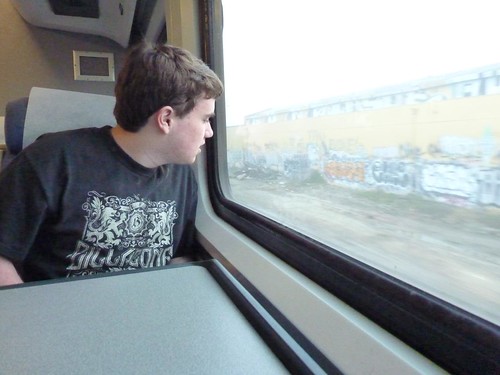
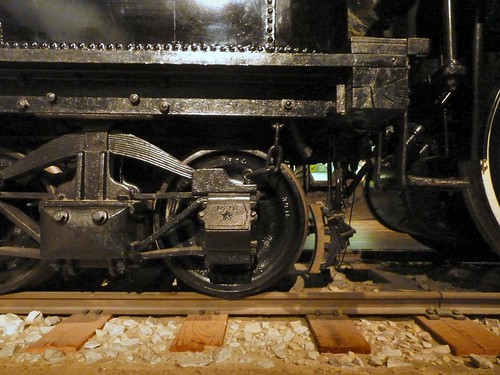
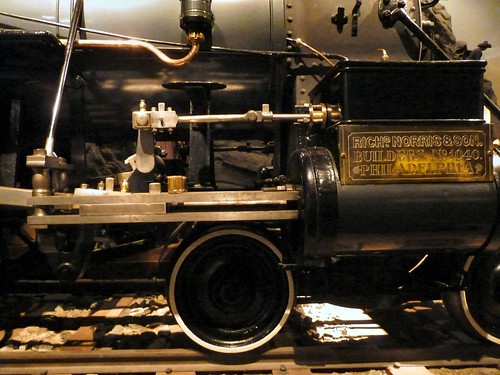
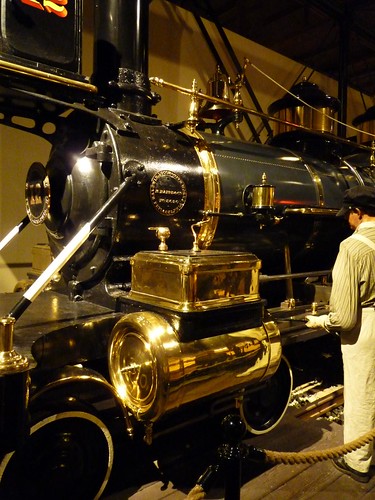
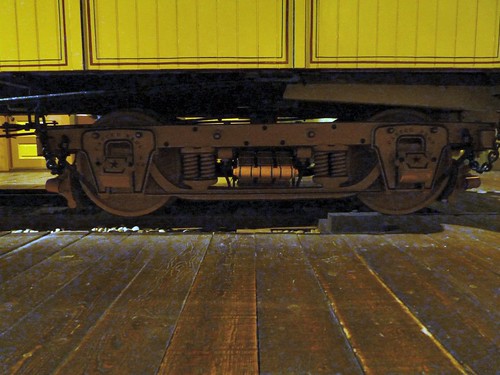
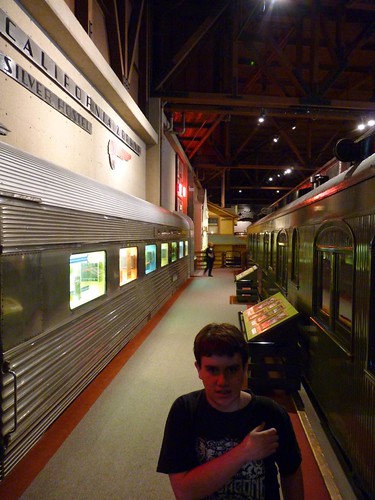
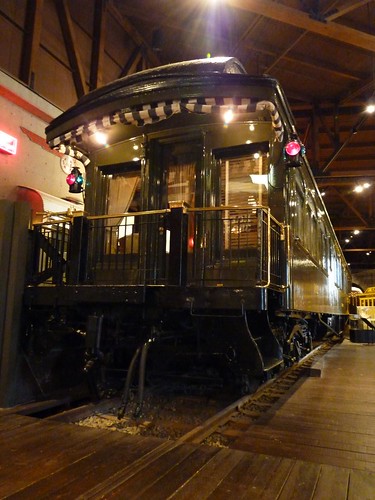
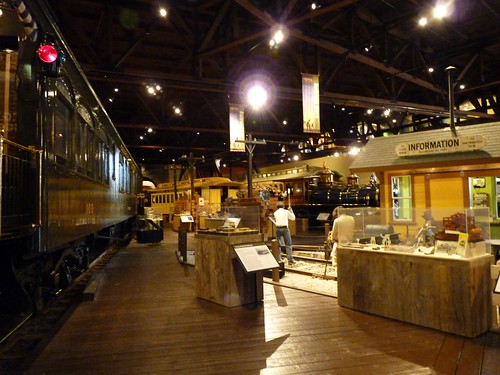
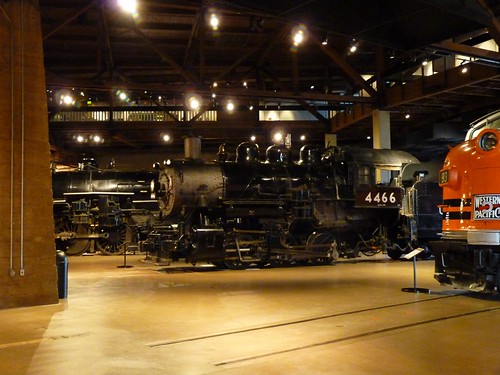
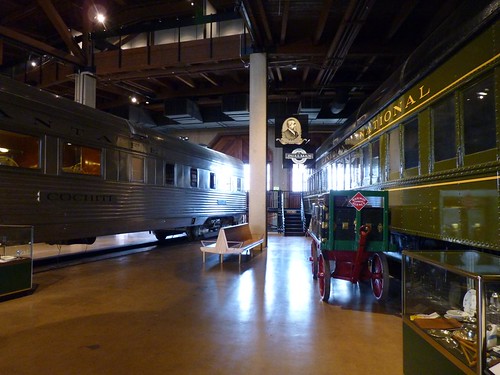
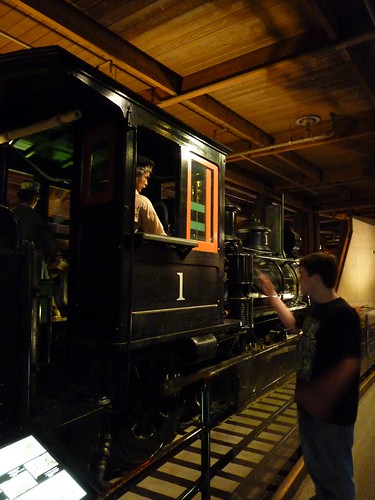
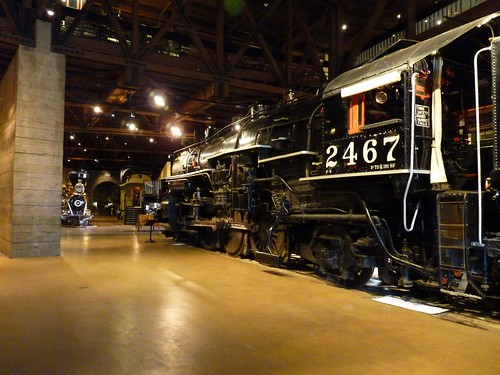
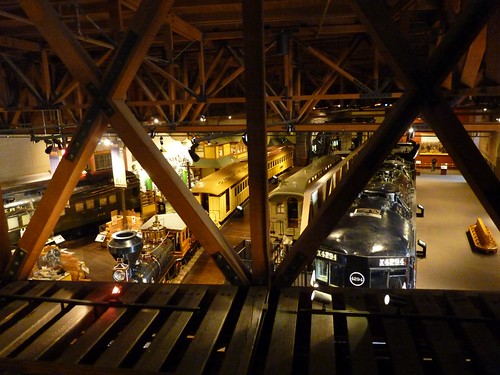
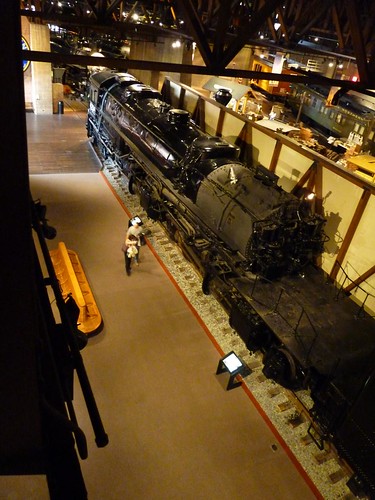
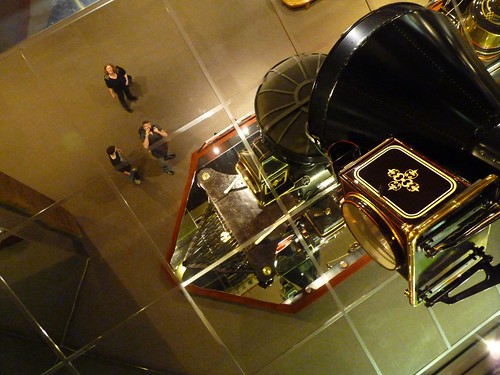
Last week we took the Amtrak Capital Corridor train from Emeryville to Sacramento and walked over to the California State Railroad Museum. I had never been there before and it is really a great place.

Picture 004

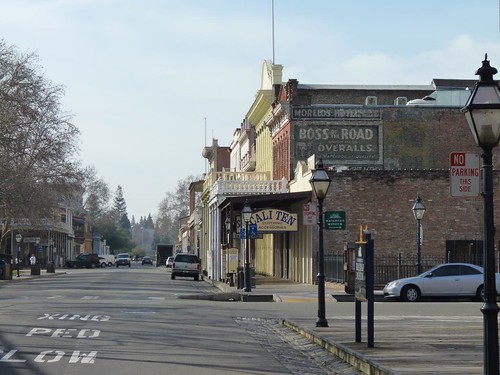
Pretty winter day in Old Sacramento.

Picture 005

Picture 013

Picture 017

We had the place pretty much to ourselves in the morning.

Picture 028

Picture 036

Picture 038

Picture 056

Picture 058

Picture 059

Picture 064

Picture 066

Picture 072

Picture 074

Picture 078

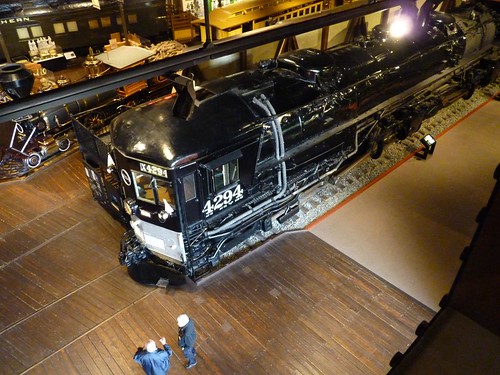
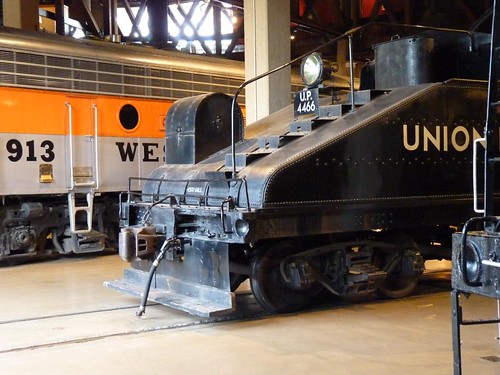
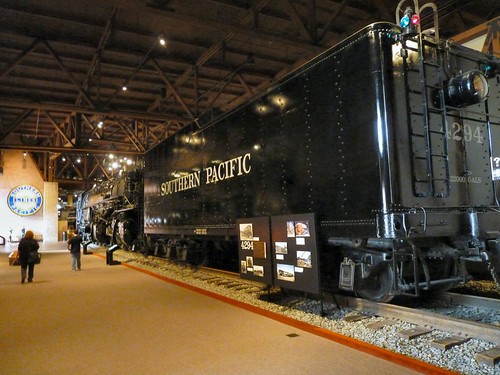
SP 4294

SP 4294

SP 4294

Picture 105

Picture 126

Picture 129

Picture 130

There are more photos at my pages on Flickr.

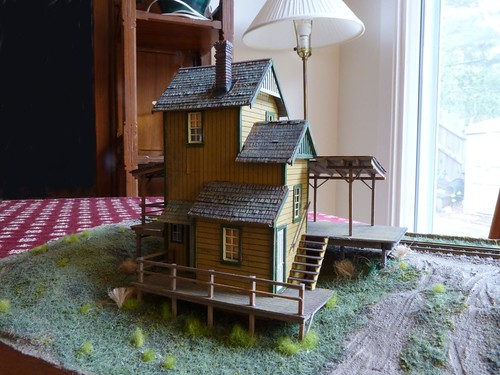
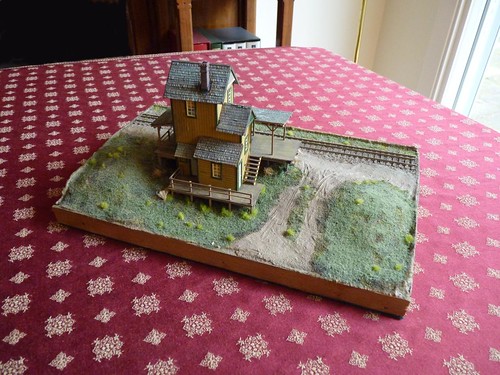
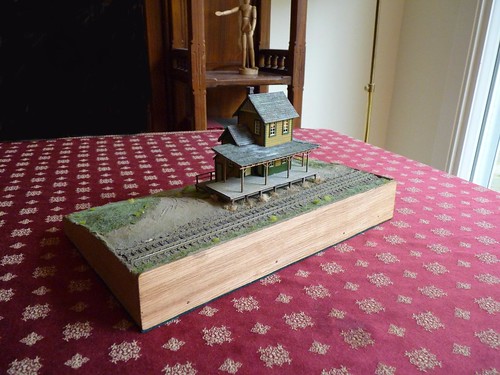
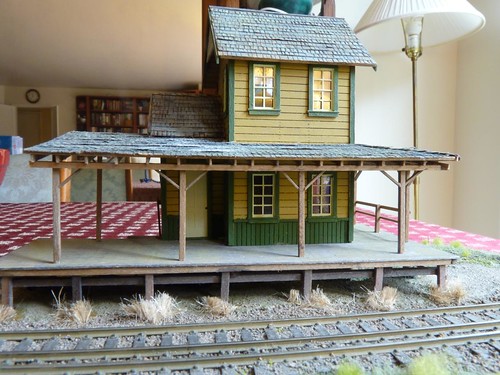
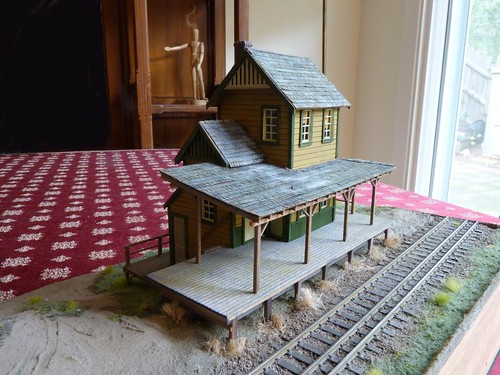
Foothill Station - Finally

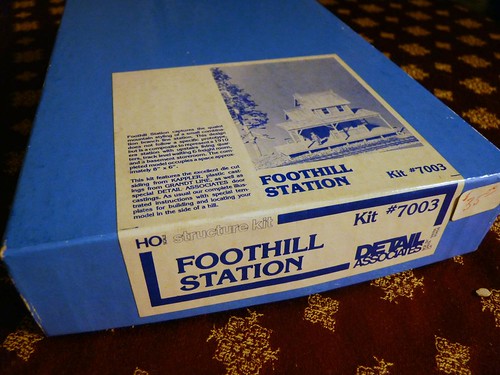
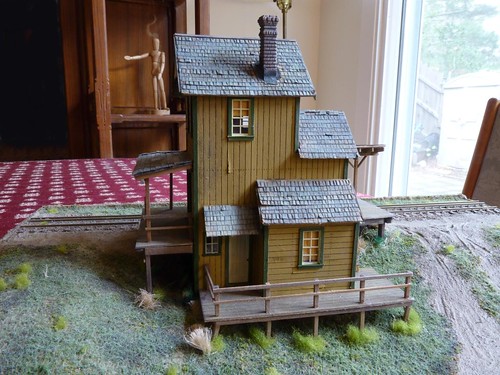
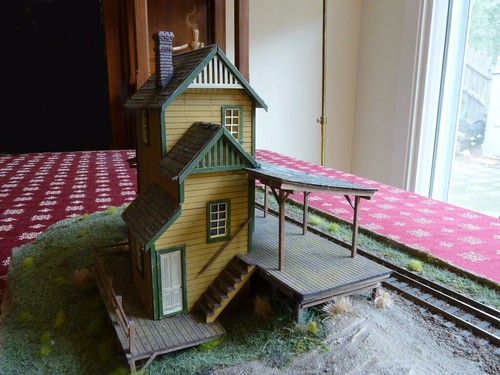
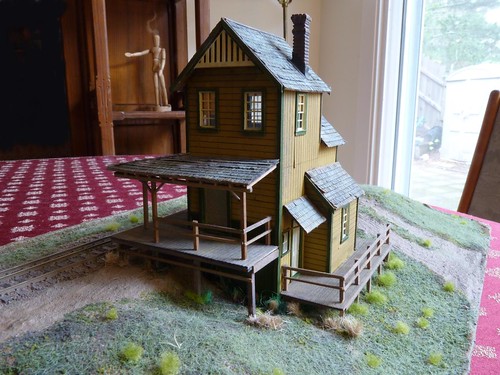
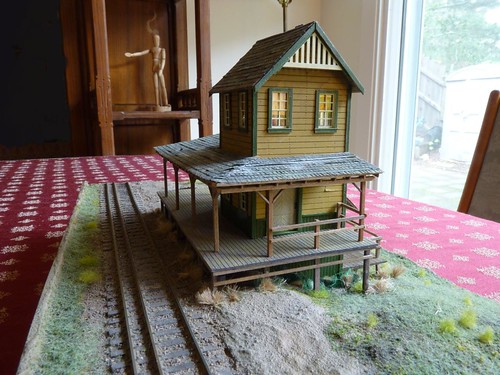
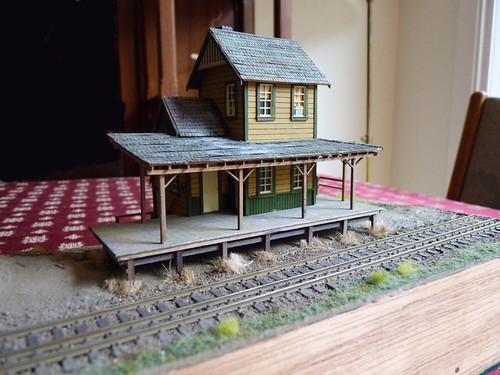
In the summer of 1989-90 I worked at The Roundhouse model railroad shop in the North Hollywood/San Fernando valley area of Los Angeles. I really enjoyed that summer job and bought several kits while I was there. One of them was Detail Associates kit number 7003, Foothill Station.

Picture

I’m very happy I recently finished the structure but embarrassed to say it took me 20 years to complete.

One of the great side effects of almost continually building things with young adults in our Autistry Studios workshops is that I find I am much better able to just sit down and build things without procrastination. I probably did 10% of this model’s construction in 1989-90,  another 10% in 2000, and the final 80% in a couple weeks of December 2009.

My review of the kit: This was actually a pretty tough kit. I did a little Google searching this evening and cannot find any pictures of this kit built-up. I’m thinking that maybe other folks found this kit hard too. What was hard?

Foothill Station - Finally

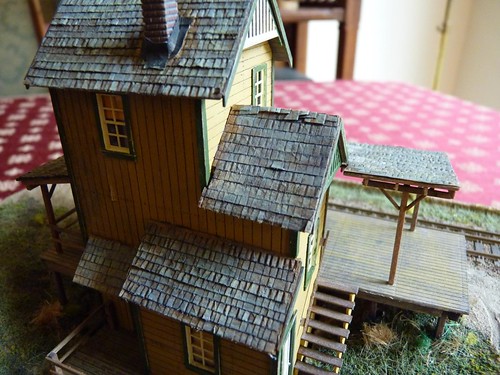
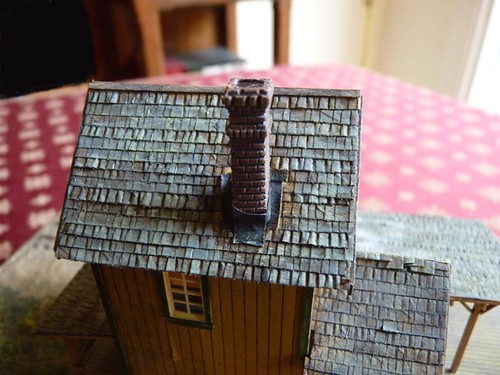
The multi-level nature of the kit and the many walls which make the shape so appealing are really hard to get properly square and level. In fact, I failed to get the walls truly square although it does not show in the pictures. Overall it is a great kit and I’m really pleased with how it came out.

Picture 002

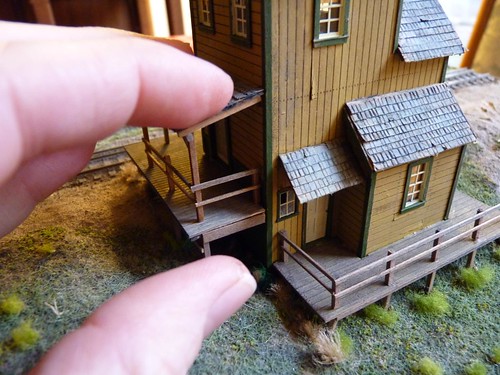
The building has a VERY small footprint which makes it ideal for smaller layouts. The admittedly UGLY bunches of grass around the various posts as they enter the ground scenery are intentional and hide that the building is not glued to the base so the posts all are in rather large holes in the scenery. Hopefully someday I will move the building to my layout.

Don’t get me started about how long I have been “building” my layout!

Foothill Station - Finally

Foothill Station - Finally

Foothill Station - Finally

Foothill Station - Finally

Foothill Station - Finally

Foothill Station - Finally

Foothill Station - Finally

Foothill Station - Finally

Foothill Station - Finally

Foothill Station - Finally

Foothill Station - Finally

Foothill Station - Finally

Foothill Station - Finally

Picture 014

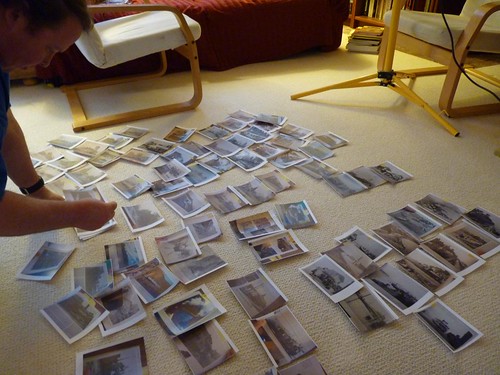
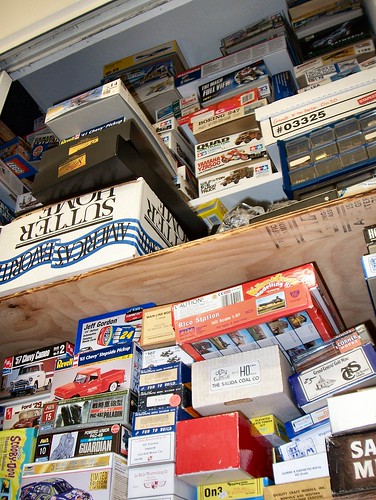
If I can’t build things a bit faster — I’ll be dead before I make any sort of a dent in my un-built kit collection! NOTE: the picture above was what it looked like three years ago — I have even more kits now.

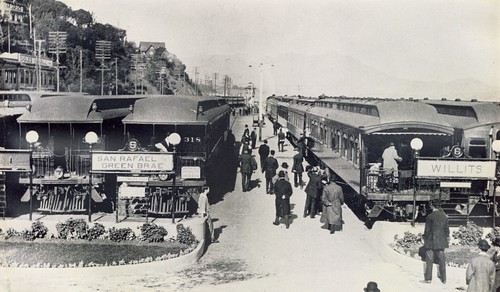
I prefer to model the 1920’s. I settled on this era in a process I outlined years ago. However, I was not alive in the 1920’s. My parents weren’t either.

Trains20s

My grandmother died over ten years ago and while she was born in the teens she was pretty young in the 20’s. I want to have a body of stories and information about the era so that my model work will reflect the correct “feeling” of that time. Since first-hand information is hard to come by, here are the resources I’m using.

Literature:

Dasheill Hammet stories are very readable and give some insight into life in the 20’s. A bonus is that many of Hammett’s stories are set in the Bay Area and they imply a seedy grittiness that I want to portray.

History:

Daily Life in the United States, 1920-1940: How Americans Lived Through the Roaring Twenties and the Great Depression. A very good recent (2002) survey

Only Yesterday: An Informal History of the 1920s. Very interesting, especially when you consider that it was written in 1931!

Local history:

Both Sides of the Track: A Collection of Oral Histories from Belvedere and Tiburon.

A Pictorial History of Belvedere 1890 – 1990 a California Island Town.

Any number of the local Arcadia Publishing books…

In a separate post I’ll discuss what books I use as source material about the local railroads.

I’m not a big diesel guy. I like some of the early unit passenger trains like the Pioneer Zephyr and M-10000. I can usually tell E units from F units and I love the early slant nose E units like the E3 or the E6. I like steam and pre-Super Power steam at that (that would generally be considered pre-1920’s steam engines).

However Ryan, someone I’m building a yard module with, is big on diesels and so when he saw this engine on my blog about some pictures I took in Point Richmond, California, we wondered what it is exactly.

Picture 007

I speculated it was a GP35 but Ryan didn’t think so. He though it looked like a GP20 (one of his favorites) but the cab was wrong. I did a little digging and here’s what I found:

First, there are people on the Internet who are way more obsessive about the details of the complete rosters of every engine a railroad ever owned than I ever will be — and thank God for them!

I ended up at this very interesting site ATSF Diesel Rosters and found BNSF 1683:

BYW2, 15-in “BNSF” patch on cab, “Santa Fe” on long hood, “SANTA FE” cigar-band herald

Yep, that’s it. Anyway, BNSF 1683 started life as AT&SF 713 — a GP9 delivered in May 1956. And it is still trundling the rails in Point Richmond 53 years later.

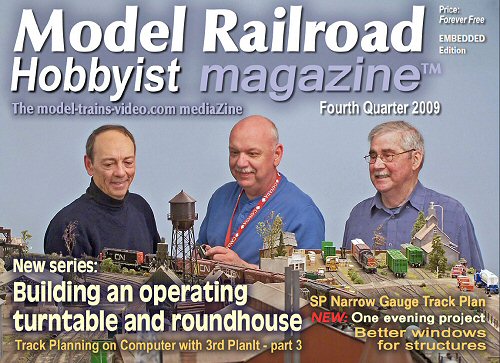
MRH Cover

Note: This review is my own opinion, unsolicited, and based purely on my experience as a customer.

I’m generally sad about the state of model railroading magazines. In August of 2006 I started a series of blog posts analyzing what has happened to Model Railroader to make it the raging wad of mediocrity it is today. I grew up loving MR. I have 46 years of MR back-issues in the loft bookcases of my office.

I have 32 years of Narrow Gauge & Shortline Gazettes and a few decades of Railroad Model Craftsman. They have ebbed and flowed as well but overall are reading now much as they did many years ago.

I’ve been open to the idea of other model railroading magazines and have subscribed to several. None stood any test of time.

I have something to be happier about.

Joe Fugate and friends started Model Railroad Hobbyist magazine in January of 2009. Model Railroad Hobbyist magazine (hereafter MRH) is published quarterly (bi-monthly in 2010) as a free download in PDF format using many of the rich media extensions available in that format.

I really liked the first issue and I wished them well in the tough world of model railroad publishing but I must admit I said to myself “I bet they threw everything into that first issue and the content will dwindle over the next few issues.”

I got busy with life, work, and other non-modeling pursuits and while I downloaded the 2nd and 3rd issues I did not read them.

This week the 4th quarter issue came out and I started to read it. And read it. And look at it again. It is great. I learned something new, several times. It was fun to read. It is what I think a great model railroading magazine should be.

I double checked by sitting down this morning and reading through all four issues back-to-back. I’m really impressed. I’m really happy I have these issues on my hard drive. It’s exciting to have a new magazine where I’m actually curious what the next issue will bring.
I carefully read Joe’s editorials and articles to see if he actually delineates the secret sauce. In issue #1 he says that it’s the rich media. In another issue he says it’s because he advocates “layout modeling.” I think he’s missed on both. It’s the content. Not only are the articles excellent quality but they have room to breathe. In a medium where megabytes are cheap MRH can allow an article to go long, go deep, have more pictures. Print can’t compete.

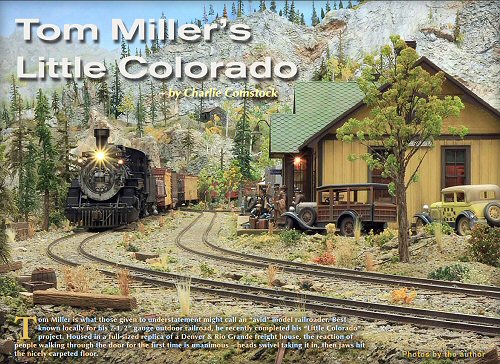
MRH Article

I highly recommend Model Railroad Hobbyist magazine.

Go look. It’s free and I feel really confident that you will find it time well spent.

Have you gone yet?

Walt Disney was a model railroader. Indeed, his idea of Disneyland was as a huge walk-in, live-in complete model railroad. Recently the Walt Disney Family Museum opened in San Francisco.

LillyBelle

We just went this morning and it is a very nice display of the work and life of Walt Disney.

Photography is prohibited inside but some folks over at Mouse Planet have a great set of pictures and a detailed description.

DisneyMuseumMP_23

My rating of the museum? It is a MUST SEE for die hard Disney fans.

For everyone else the quality and richness of the environment and displays is very impressive. If you are an autistic or aspie (and/or have one in your family like we do) bring earplugs because the audio in the displays can be a bit overwhelming otherwise. The price  is appropriate for the quality of the displays ($20 for adults, $12 for kids) but may be too high for some families.

Mike recently commented on Nick’s next railroad and I wanted to respond in detail.

Dan, a couple questions for you. I recently got back into model rr after only doing it as a kid…and those were the days when we’d run them like racecars to see if we could get train cars to tip off the track around corners!

[...]

So, I started from scratch and made a L-shape layout in a corner so far. It’s about 6 feet long on one wall and 8 feet on the adjacent wall.

Here’s my question.

I see that you use cork roadbed under your track. But What do you use for scenery ground? What I mean is this: do you glue the scenery to the plywood base, or do you use a styrofoam, or that putty compound?

If you use sytrofoam or something else, does it completely cover the plywood base, or do you use it only to attach certain scenery like a peg board?

Do these make sense? Please help…any helpful hints would be great!!!

I know there are much more complex ways to build layouts but bare plywood is a worthy start and I think it is super important to be able to actually achieve a certain level of “doneness” in the scant time modern life gives us and bare plywood is FAST.

I would use cork under the track. Next I would paint EVERYTHING (except the track!) with a coat of dirt colored paint.

Here’s Nick doing just that with his micro layout.

Nick Paints Dirt

You can see two peanut butter jars full of two different colors of latex house paint. I get these colors by going to my local hardware store and they invariably have a stack of “rejects” where they mixed a can of color and the customer did not like it so they had to do another. They sell these for $5.00 a gallon. I look them over for a nice dirt brown/olive. I’d still buy a can at full price if they don’t have any rejects.

Anyway — paint over the whole layout with the base color so you cannot see any bare wood anymore.

Next I use a brown dirt-colored fine paper mache product mixed with real dirt and white glue to make a “mud” and paint this everywhere too.

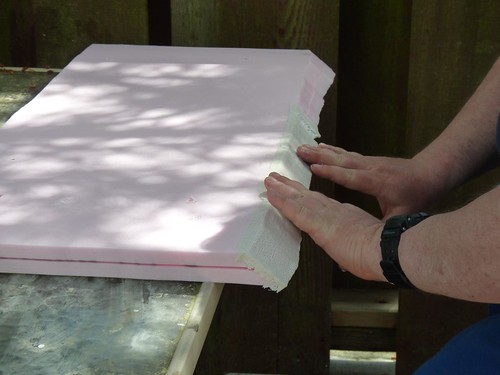
To make hills you can build them up out of Styrofoam (very messy) or just use wads of paper and cover them with plaster cloth like Nick is doing here.

plaster cloth

Then paint and mud the hill. Sprinkle real dirt and then glue it down by soaking with white-glue-water mix — with a few drops of Mr. Clean to break the surface tension so it soaks in better.

This makes a great “base” and then you can add rock castings, trees, grass, bushes as you go.

When you gotta go ...

Keep an eye out for our next steps with Nick’s layout: we’re almost ready to build up the terrain.

Having had so much fun with our first micro layout, Nick wanted to move on to something more ambitious. After pouring over my 30 year stack of Narrow Gauge & Shortline Gazettes, Nick wanted to do a small lumber layout and we chose On30.

Bachmann On30 Porter 0-4-0s can negotiate a 12″ minimum radius and Nick wants a large trestle.

I had an idea but was having a hard time describing it to Nick so I made a quick planning model in 1/8″ = 1″ scale. The footprint is 30″ x 4 feet long and about 4 feet tall.

Nick's micro layout planning model

I made a pencil sketch to show how the bridge would look.

LayoutPlan

The lower back will have room for a separate small town/logging camp area. We may do this in HO scale.

Nick's micro layout planning model

We labeled lots of the construction dimensions on the planning model so it’s acting as kind of a 3D blueprint.

The frame is made of 3/8″ x 4″ plywood planks ripped on the table saw and connected with 2×2 blocks glued and screwed. We added casters so it is easy to roll around.
Nick Fitting the Pieces Together

Nick with the Power Drill

Next we built up the sides and made an oval of plywood as the roadway.
Nick Drilling

We’ll cut away the portion that will be spanned by the bridge.

Nick Drilling

Next Page »